
Moving Gently
Yoga classes vary far more than the word suggests
Two classes with the same name can be a gentle hour on the floor or a sustained physical effort. Choosing badly is the most common reason people conclude it is not for them.
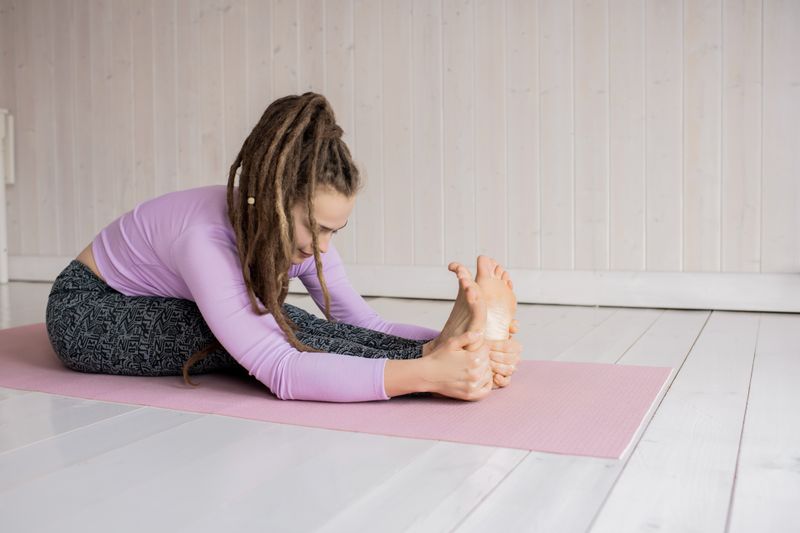
Everything here earned its place by changing an outcome. Nothing about yoga classes is included to round the number up.
What matters most
- The word covers a very wide range of styles, intensities and intentions.
- Most reported benefits are plausible and the evidence base is uneven in quality.
- A teacher who offers modifications matters more than the style named on the timetable.
One word, many activities
A class labelled yoga might involve holding still positions for minutes, moving continuously in time with the breath, or lying supported for most of an hour. Those are different activities with different physical demands, and someone who disliked one may find another entirely reasonable.
The names used for styles are not standardised across studios, so the timetable description is often less informative than a phone call. Heat is a further variable, with some classes run in deliberately hot rooms, which changes the experience and the fluid demands substantially. People who conclude that yoga is not for them have usually tried one class of one style with one teacher, which is a small sample.
What the evidence supports
Studies have generally found improvements in flexibility, balance and self-reported wellbeing, which are the outcomes most easily measured. There is reasonable evidence of benefit for some kinds of persistent back pain, though comparisons with other forms of exercise often show similar results. Much of the research is small, short and difficult to blind, which limits how strongly any specific claim can be stated.
On an ordinary week, broader claims about detoxification, organ function or curing conditions are not supported and should be treated as marketing rather than instruction. The honest summary is that it is a reasonable form of movement with some specific advantages, not a treatment for a list of conditions.
Flexibility is not the entry requirement
The most common reason people give for not starting is insufficient flexibility, which reverses the relationship between the practice and its effect. Range of motion varies enormously between individuals for reasons including joint structure, which no amount of practice will alter. Comparing your position to someone else's in the room is therefore uninformative, since their skeleton may simply permit a different shape.
Progress within your own range is the meaningful measure, and it tends to be slow, uneven and mostly invisible from outside. Pushing into pain to reach a shape is the main way people injure themselves in a class, and it is entirely avoidable.
Choosing a class and a teacher
A teacher who offers alternatives for each position, without making them sound like a lesser version, is the single most useful thing to look for. Beginner courses that run over several weeks with the same group tend to work better than drop-in classes for anybody starting out. Telling the teacher about injuries, pregnancy or a recent operation before the class starts is normal and changes what they will suggest.
The useful part is this: class size matters, since a teacher with thirty people cannot see what any individual is doing with their neck. Qualifications vary widely between countries and are not consistently regulated, so experience and how a teacher handles questions tell you more than a certificate.
The parts people find difficult
Wrist loading in positions that put body weight through the hands is a frequent complaint and is usually manageable with modifications. Neck loading in some inverted positions is where the more serious injuries occur, and those positions are entirely optional.
The useful part is this: the spiritual or philosophical content varies from absent to central, and people who dislike it should choose accordingly rather than endure it. Hot classes place additional demands on the body and are not the sensible starting point for anyone unaccustomed to exercising in heat. Feeling out of place is extremely common in the first few classes and is not a reliable signal about whether the activity suits you.
Where it fits alongside everything else
Yoga does relatively little for cardiovascular fitness in most of its gentler forms, so it complements walking or cycling rather than replacing them. Some styles do build genuine strength, particularly through the shoulders and trunk, though loading is limited by body weight. For balance and body awareness it is one of the more efficient options available, and those matter increasingly with age.
For most people, home practice with videos is cheaper and works for some, though it removes the correction that prevents small errors becoming persistent. Anyone with a specific medical condition should discuss it with a clinician first, since some positions are inadvisable in particular circumstances.
Everything above, in order of what to do first
- One word, many activities. A class labelled yoga might involve holding still positions for minutes, moving continuously in time with the breath, or lying supported for most of an hour.
- What the evidence supports. Studies have generally found improvements in flexibility, balance and self-reported wellbeing, which are the outcomes most easily measured.
- Flexibility is not the entry requirement. The most common reason people give for not starting is insufficient flexibility, which reverses the relationship between the practice and its effect.
- Choosing a class and a teacher. A teacher who offers alternatives for each position, without making them sound like a lesser version, is the single most useful thing to look for.
- The parts people find difficult. Wrist loading in positions that put body weight through the hands is a frequent complaint and is usually manageable with modifications.
- Where it fits alongside everything else. Yoga does relatively little for cardiovascular fitness in most of its gentler forms, so it complements walking or cycling rather than replacing them.
The takeaway
You are not choosing yoga. You are choosing one teacher, one room and one style.
The version you keep doing is the version that works.
Questions readers ask
Which style should a complete beginner pick?
A slower, alignment-focused beginner course is the usual recommendation, mainly because it gives time to learn positions before adding pace or heat.
Is it normal to feel nothing is happening?
Yes, particularly in gentler styles, where the changes accumulate slowly and are more noticeable in ordinary movement than during the class itself.


