Sleep
Sharing a bed with someone whose sleep is nothing like yours
Two people in one bed run two sets of conditions from one thermostat, one duvet and one light switch. Most of the friction turns out to be mechanical rather than personal.

Everything here earned its place by changing an outcome. Nothing about sharing a bed is included to round the number up.
What matters most
- Most bed-sharing complaints trace to a physical variable, not to how much either person cares.
- Movement wakes the lighter sleeper because arousal thresholds differ between people.
- Separate duvets resolve more arguments than any other single change.
One bed, two sets of conditions
A shared bed has to satisfy two body temperatures, two mattress preferences and two schedules using one set of controls. Almost every recurring argument about sleep traces back to one of those variables rather than to how much either person cares about the other.
Naming the variable makes it fixable, because a topper or a second duvet can be bought while a personality cannot be renegotiated at midnight. People also sleep differently across a lifetime, so a pairing that worked easily for years can start producing friction without either person changing their behaviour. Treating the whole thing as an engineering problem tends to lower the temperature of the conversation as well as the room.
Movement wakes one of you and not the other
Sleep is not one uniform state; you pass through lighter and deeper stages, and a disturbance ignored in one stage will surface you in another. Two people rarely move through those cycles in step, which is why the same shift in position wakes one partner and leaves the other untouched. Arousal threshold, meaning the amount of disturbance it takes to pull you towards waking, varies widely between individuals and tends to fall as people get older.
Put simply, that is a physiological difference rather than evidence that the lighter sleeper is fussy or that the heavier sleeper is inconsiderate. A wider mattress, or one that carries less motion across its surface, cuts the disturbance far more reliably than asking somebody to lie still.
Different schedules, one lights-out
When one person is naturally alert late and the other fades early, a bedtime chosen to be together can leave both of them lying awake. Going to bed before you are sleepy usually produces a stretch of frustrated waiting, and the bed slowly acquires an association with that waiting. Splitting the evening, so one person goes up at their own hour and the other follows with the light already off, removes the mismatch without removing the closeness.
Couples often protect the together part by moving it earlier, to a sofa or a kitchen table, rather than defending a shared lights-out that suits neither of them. Mornings are the harder half, because the earlier riser makes noise while the other is still in the lightest and most interruptible part of their night.
Snoring, and where it stops being a domestic issue
Snoring is soft tissue vibrating as air squeezes through a narrowed airway, which is why it gets louder as muscles relax further into the night. Position matters, and many people snore more on their back because gravity draws the tongue and soft palate towards the back of the throat.
In practice, loud snoring accompanied by gasping, pauses in breathing or heavy daytime sleepiness is a different matter and belongs with a doctor rather than a gadget. The partner is often the only witness to those pauses, so what one person notices at three in the morning is genuinely useful information for a clinician. Nothing written here can assess any of that; an assessment is straightforward to ask for and worth asking for early.
Separate beds are not a verdict on anything
Some couples sleep considerably better apart and then spend years treating that arrangement as a failure to be concealed from visitors. Separate sleeping was unremarkable in several periods and cultures, so the embarrassment attached to it now is a social inheritance rather than a clinical finding.
Where it helps most, what matters is whether the decision is made jointly, because a bed moved out in silence carries a meaning that a bed moved out by agreement does not. Many couples land on a hybrid: together most nights, apart when one of them is ill, travelling for work or coming off an unusual shift. Lost sleep makes people irritable and less generous with each other, so the arrangement that produces more sleep often repairs the relationship it appears to threaten.
If that does not fit your week, it is not a failure of willpower.
The order to try things in
Separate duvets are the cheapest intervention and settle the largest cluster of complaints, since temperature and cover-stealing are the two most frequent triggers. Set the room for the warmer sleeper and let the colder one add layers, which is easier than heating a room for one person and overheating the other.
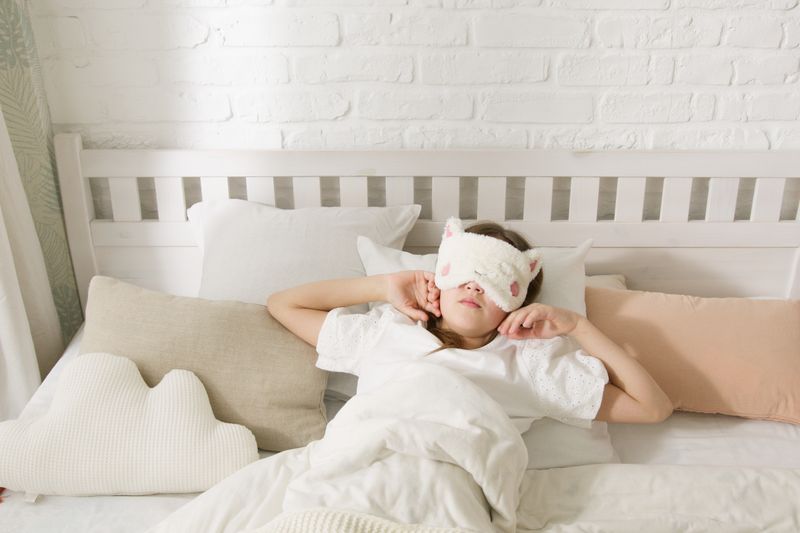
Earplugs and an eye mask let the earlier sleeper stay under while the later one comes to bed, and remove the need for anybody to tiptoe. Mattress size beats mattress firmness in a shared bed, because empty space between two bodies absorbs movement better than any material can. Change one thing at a time and give it a week, since night-to-night sleep varies enough that a single good or bad night proves very little.
Everything above, in order of what to do first
- One bed, two sets of conditions. A shared bed has to satisfy two body temperatures, two mattress preferences and two schedules using one set of controls.
- Movement wakes one of you and not the other. Sleep is not one uniform state; you pass through lighter and deeper stages, and a disturbance ignored in one stage will surface you in another.
- Different schedules, one lights-out. When one person is naturally alert late and the other fades early, a bedtime chosen to be together can leave both of them lying awake.
- Snoring, and where it stops being a domestic issue. Snoring is soft tissue vibrating as air squeezes through a narrowed airway, which is why it gets louder as muscles relax further into the night.
- Separate beds are not a verdict on anything. Some couples sleep considerably better apart and then spend years treating that arrangement as a failure to be concealed from visitors.
- The order to try things in. Separate duvets are the cheapest intervention and settle the largest cluster of complaints, since temperature and cover-stealing are the two most frequent triggers.
The takeaway
Fix the duvet, the temperature and the mattress before you start trying to fix each other.
The version you keep doing is the version that works.
Questions readers ask
Is it unkind to ask for a separate room?
It is a practical preference rather than a rejection, and it lands very differently when raised as a joint decision instead of announced after a bad night.
My alarm wakes my partner every morning. What helps?
A vibrating alarm, a quieter tone that ramps up, or moving the alarm out of arm's reach all help, and a consistent wake time helps more than volume.